¶ A Word on Internet Recipes
As in making mozzarella first, not every recommendation or recipe on the internet about cheese making or dairy in general is a good idea to follow. Many well-intentioned bloggers, homesteaders, students and others will learn a little bit about cheese making and experience the euphoria of having this new knowledge and want to share it with confidence to all and sundry around them. Their enthusiasm is admirable, and infectious! But their advice is likely to have some issues, as it takes time to accumulate real knowledge on a subject before you can teach it accurately to others. The phenomenon is referred to as the Dunning-Kruger effect. The knowledge graph sometimes goes something like this:
(from here)
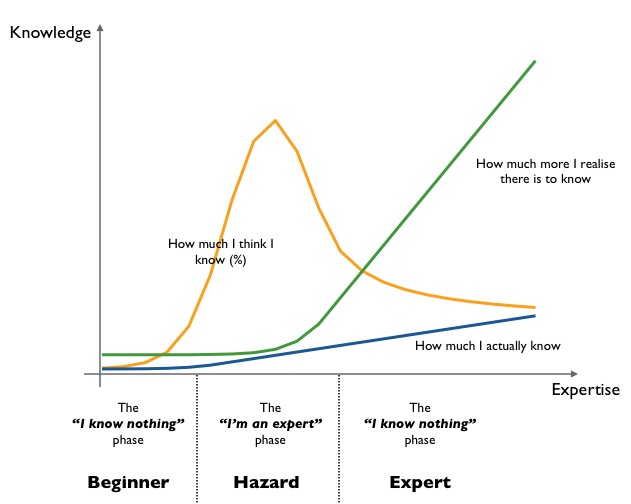
This is exactly the genesis of all of the beginner recipes on the internet about making cheese, and they're all basically variations on paneer.
A simple perusal of posts on the Cheese Forum will yield a quick conclusion that cheese making is anything but simple, but that this complexity is part of the fun. There is nothing wrong at all with starting at square one, and doing a cooked lactic cheese for the first baby step into the world of cheese making. In fact, that's a very sensible starting strategy. It's important to realize that there is much more to it, and many of the recipes on the internet are missing vast amounts of nuance, or they are claiming to make a particular kind of cheese when their recipe doesn't resemble the real thing at all. There are many “cheddar” recipes that are not cheddar in any discernible way when compared with other cheese recipes. Many leave out any discussion of acidity which will make or break a cheese, or other important factors that differentiate a given cheese style from others.
A particularly problematic issue is when a recipe advocates using cultures such as kefir, whey culture or other non-commercial culture sources without an understanding of how to properly generate or manage them. Worse, some advocate using no culture at all in a situation where that would invite incredible amounts of risk to the consumer of any cheese produced. Using anything other than DVI cultures should be considered an advanced technique. It can be done, and can be quite rewarding, but it shouldn't be the first thing a brand-new cheese maker does unless they are under the direct tutelage of an experienced cheese maker.
In an effort to simplify making a given cheese, the author may inadvertently be setting their readers up to get sick, or at the least to face significant disappointment in their results. Using non-commercial cultures can simplify cheese making and save money, but it needs to be done with knowledge and care, and be done by someone who has at the very least spent some time with commercial cultures to get a feel for how the process goes with viable cultures so they can tell when something goes wrong. Beginners need a safe reference point, after which they can begin to experiment and branch out.
When it comes to random cheese making recipes on the internet, take them with a large grain of salt. It's a good idea to compare them to sites or books with known-good recipes so you can sanity check them. A bad experience at the worst could land somebody in the hospital, and in the best case tempt a discouraged cheese maker to swear off all cheese making. A proper approach to learning cheese making should maximize the likelihood a new cheese maker wants to keep going.
On the flip side, there are many good recipes out there. Be vigilant, be wise, and happy hunting!